
Six Action Steps to Boost Your Creativity Sector
Monday, October 19, 2026
Leila teaches primary school during the week and illustrates greeting cards at weekends. For months her weekend sessions had followed the same pattern. She would set up at the end of the dining table, sketch something she did not like, rub it out, and make tea instead.
She had already read about what to avoid in the creativity sector. She cleared the clutter, softened her lighting and took down the stack of marking that lived on her chair. The space felt better. But it still did not feel alive.
That is the moment this lesson is for. Removing what blocks creativity is half the job. The other half is inviting inspiration in on purpose. In environmental Feng Shui, creativity flows most naturally when three conditions are present: mental clarity, dynamic energy flow and psychological openness.
Here are six practical steps to build all three into the creativity sector of your home. You do not need to do them all at once. Think of them as a menu, and choose what appeals.

Before we start, it helps to know the goal. A well-activated creativity sector feels visually stimulating but not chaotic, organised yet flexible, and inspiring without creating pressure. Your brain begins to link the space with discovery and possibility.
Over time, people often notice that ideas come a little more easily in this part of the home. They feel more confident sharing their thoughts and more willing to start that project they have been putting off. That is the quiet power of an environment that says exploration is welcome here.
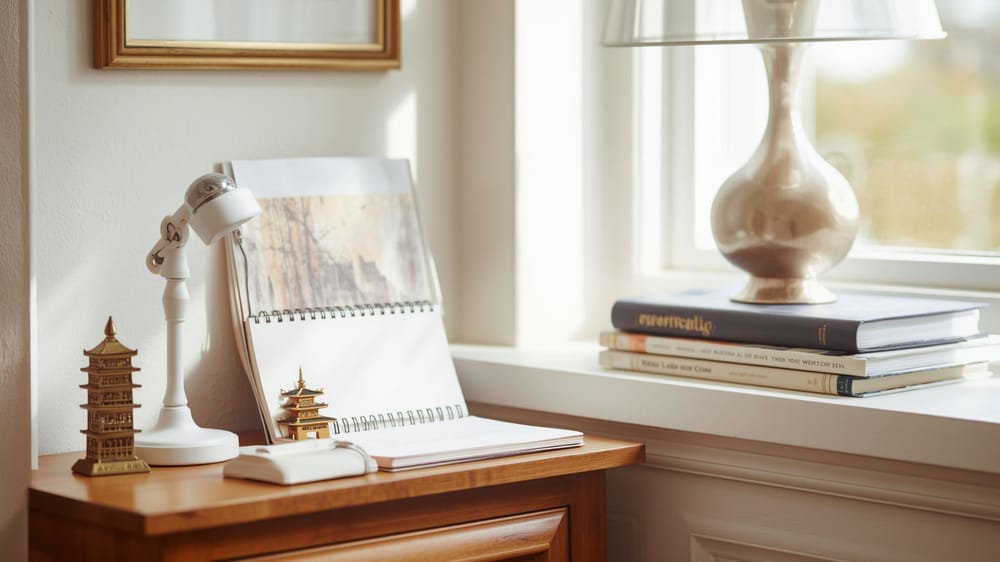
Start with a small visual anchor for inspiration. It can be a desk, a side table, a shelf or a slim console placed in the creativity sector. The furniture matters far less than what you put on it.
Keep it to a few carefully chosen items that stand for curiosity and discovery. A sketchbook or journal, an unusual object collected on a trip, a book about art, design or innovation, or a small sculpture that makes you smile. Four or five things, not twenty.
The idea is to build a visual trigger. When your brain keeps meeting objects connected with curiosity, it begins to associate the surrounding space with that state of mind. Environmental psychology suggests that workspaces holding symbolic cues for creativity can encourage a more open approach to problems. Just sitting near your focus point may nudge you into an exploratory mood.
If children share your home, invite them to add something now and then. A drawing, a funny pebble, a LEGO creation. Their curiosity is exactly the energy you are hoping to invite.
A quick note before you rush to buy anything. None of these steps requires a big budget or a home makeover. Most of them use objects you may already own, moved to a better place with a clearer purpose. Intention does a lot of the work here, so choose things you like looking at.
The Wen Chang Pagoda is one of the most respected Feng Shui charms for creativity and intellectual growth. Wen Chang is the deity linked with literature, learning and mastery, and in imperial China, scholars preparing for their examinations kept miniature pagodas on their desks to sharpen concentration.
The structure is rich with meaning. Its tiers stand for the gradual climb of knowledge, each level representing a step from basic understanding towards deeper mastery. Today it is used to support studying, writing, artistic work and strategic thinking.
Place yours on your creative focus point, on a bookshelf within the sector, or beside the desk where you do creative work. Unlike charms for wealth or protection, this one speaks specifically to mental development. It quietly reinforces the message that this corner is for thinking, learning and making.

The creativity sector belongs to the Metal element, so activating Metal is one of the most direct ways to wake it up. In more advanced practice, the idea goes beyond dotting a few metallic objects about. You create a small area, a metal resonance zone, where refined pieces suggest precision, clarity and intellectual discipline.
Metal represents the ability to shape raw ideas into something usable. Just as a craftsperson uses metal tools to turn material into a finished design, Metal energy helps you move from vague imagination to practical creation.
Good choices include brass sculptures, stainless steel art, geometric metal ornaments and polished metal trays. Focus on craftsmanship rather than quantity. Clean lines and balanced proportions say clarity and discipline, and they help the space feel structured enough to turn dreams into projects.
Fu Dogs, also known as Chinese guardian lions, traditionally stand in pairs at the doors of temples and palaces to guard against negative influences. In interior Feng Shui, though, a single Fu Dog can be used symbolically to guard your creative work.
Why would ideas need a guardian? Because creativity takes courage. You have to share thoughts that might sound unusual or unfinished, and that vulnerability makes many of us hesitate. A Fu Dog stands for strength and confidence, and it reminds you that your creative expression deserves protection and respect.
Place it near your creative focus point, on a shelf within the sector, or beside your workspace. Its presence reinforces a simple psychological message: bold thinking is welcome here, and ideas deserve space to grow before anyone criticises them.
There is one more reason this step matters for families. Children read a space instinctively, and a corner that feels protected and encouraging tells them their ideas are safe too. A guardian on the shelf can become a small family tradition, a way of saying that wobbly first drafts are always welcome.
Our brains are wonderful at getting used to things. A picture that thrilled you in January can fade into the wallpaper by March. Once that happens, it stops sending any signal at all.
To keep the sector alive, introduce something new every so often. Swap the artwork every few months, display different books or design objects, or bring out fresh creative tools and materials. When your brain notices something new, it becomes more attentive, and attentiveness feeds curiosity.
In Feng Shui terms, rotating your inspirational objects prevents stagnant Chi from building up. Leila started a simple habit of changing one item on her focus point on the first weekend of every month. It took five minutes and it made the space feel fresh each time.
You can make the rotation playful. Keep a small box of objects, postcards and prints, and pull out something different each month. Put the retired items away rather than throwing them out, because they can return later and feel brand new again.
The last step brings us back to light. Different lighting supports different kinds of thinking. Brighter light encourages focus and analytical work, such as writing or technical design. Softer light invites imagination and relaxed brainstorming.
So rather than relying on one fixed light, give the creativity sector a little flexibility. An adjustable desk lamp, light from more than one angle, or dimmable controls all work well. You can then match the lighting to the kind of work you are doing.
In Feng Shui terms, this lets the space move smoothly between Yang energy, which is active and focused, and Yin energy, which is reflective and imaginative. When your environment supports both, creativity has room to breathe.

If you are already imagining where your own creative focus point might go, you are well on your way.
What you just learned is one piece of a larger system. Every sector of your home connects to the others, and the results come when you understand how they work together and what to do in each one.
That is the idea behind the Inner and Outer Feng Shui program I built together with Master Dom, a renowned Feng Shui Master from Singapore known for helping ordinary people attract luck and turn situations around. Outer Feng Shui aligns your home's energy using the same ancient principles Chinese emperors used for over 5,000 years. Inner Feng Shui clears emotional blockages, rewires negative self-talk and raises your internal frequency, so you can act on the inspiration your space starts to invite.
Starting is free. Click the button, create your free Skool account, and you can begin watching right away. A selection of lessons across both Inner and Outer Feng Shui is already unlocked for you, with no payment and no card required.
Activating the creativity sector is about building an environment that feels clear, lively and safe to explore. A creative focus point, a Wen Chang Pagoda, a metal resonance zone, a Fu Dog guardian, a regular rotation of inspiration and flexible lighting are six ways to do exactly that.
Leila started with the focus point and the monthly rotation. Her first weekend after, she finished two card designs without once reaching for the kettle. Pick one step, try it this week, and see how your corner responds. Inspiration loves an invitation.
Our Inner & Outer Feng Shui System™
Get FREE immediate access to the Inner & Outer Feng Shui System. Selected lessons unlocked daily — map your home’s 9 life sectors, activate your main door, and harness your inner chi. Simply create your Skool account and start immediately.
Free · Immediate access
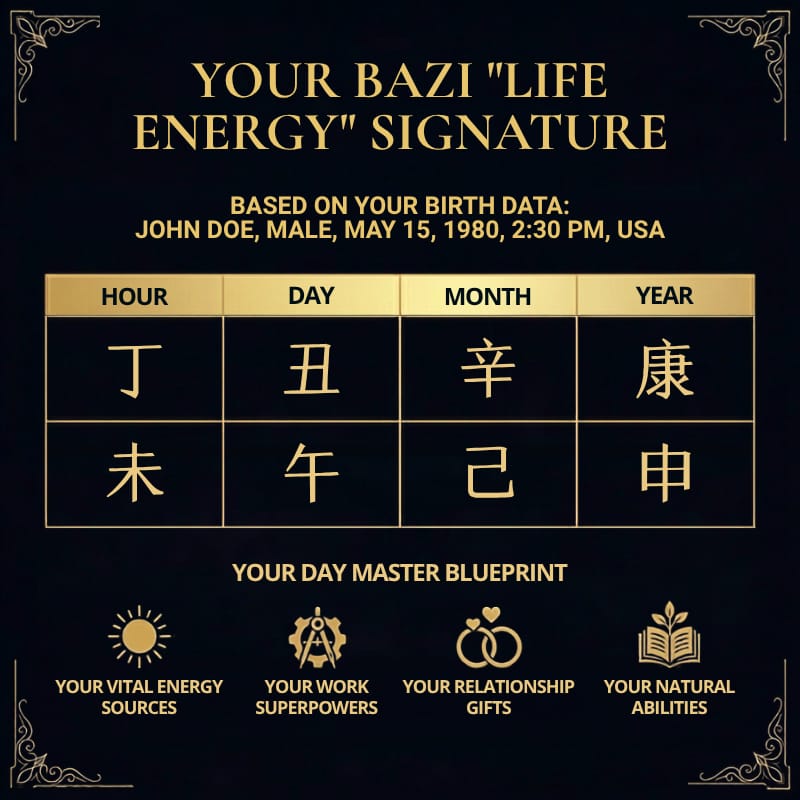
Free BaZi Destiny Life Energy Reading
Discover your Day Master and learn how it is shaping your personality, strengths, and natural luck.
Free · Instant delivery
Follow Us On Our Socials
We Post Daily Content On Internal & External Feng Shui, Spirituality, Manifestation and More!



Privacy Policy | Terms & Conditions
Copyright © 2026 Chi Manifestation. All Rights Reserved.
Your luck is waiting to be aligned
Get a free Day Master BaZi reading, or unlock free access to the Inner & Outer Feng Shui system — no card required, start immediately.
Get Free Resources