
Power Tools for Your Creativity and Children Sector
Monday, October 12, 2026
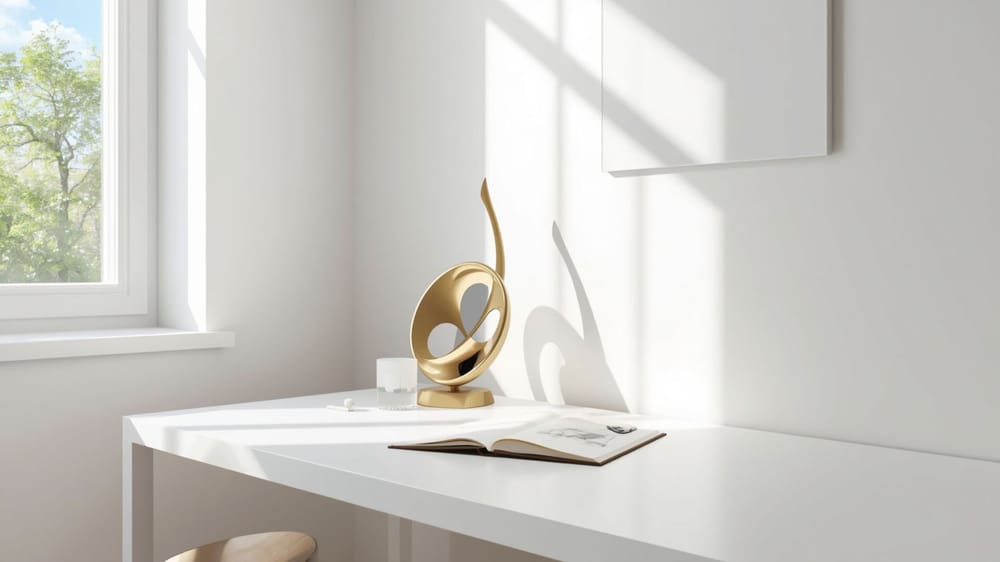
Daniel had been staring at the same blank page for forty minutes. He was a freelance designer with a client deadline on Friday, a good coffee beside him and, apparently, no ideas whatsoever. He tidied his pens. He checked his email. He looked at the ceiling.
What he did not do was look at the corner of the room where his desk sat, which also happened to be the west side of his flat. It was crowded with unread magazines, a drying rack, three half-finished projects and a fabric lamp the colour of old tea. Nothing in it said, come on in, new ideas.
A week later he cleared that corner, added a few well-chosen pieces, and noticed something that felt almost embarrassingly simple. He sat down, and the ideas came more easily.
Is that Feng Shui, or is it just a tidier desk? Master Dom would say it is both, and that is rather the point. Today we are looking at the creativity sector and six power tools for waking it up.
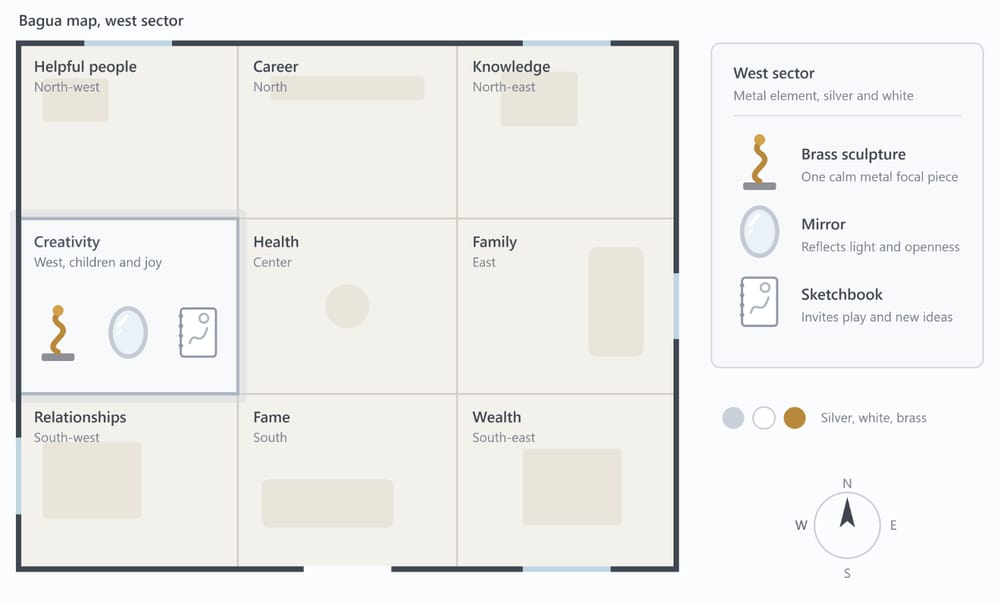
In Feng Shui, the creativity sector is about the ability to generate ideas, solve complicated problems and express original thought. It is easy to assume that means paintings and poetry, but the sector reaches much further. It covers business ideas, practical solutions to everyday problems, artistic or intellectual originality, and the courage to look at a situation from a fresh angle.
Almost every working adult uses this energy. Entrepreneurs, writers, engineers, strategists, parents solving a tricky bedtime standoff, all of them rely on creative thinking. And creativity never happens in isolation. It is shaped by your inner mindset and by the space around you. Feng Shui recognises that an environment can stimulate your thinking or quietly suppress it.
On the Bagua Map, this sector belongs to the Metal element. Metal stands for clarity, refinement, structure and precision, much like the way a metal tool shapes a rough material into something finished. In the same way, Metal energy helps turn raw ideas into meaningful results. This sector is also connected with children, which makes it a lovely area to look after in a family home.
When it is strong, people often find it easier to concentrate, brainstorm and approach a problem from new directions. When it is weak or cluttered, the mind can feel blocked. You might struggle to come up with ideas, feel little motivation to start a creative project, or become frustrated when a problem will not budge.
So strengthening this sector is not about decoration. It is about building a space that actively supports curiosity, imagination and exploration. Here are six tools to do exactly that.
Because this sector belongs to Metal, bringing metal into it is the most direct way to activate it. But advanced Feng Shui practice makes a useful distinction. Not all metal carries the same influence. Instead of scattering random metallic bits around, the aim is to introduce refined pieces that suggest precision, craftsmanship and intellectual clarity.
Good choices include polished steel sculptures, brass or bronze decorative objects, geometric metal artwork, and metallic desk instruments or tools. Think of the way a blade must be sharpened to do its work. The Metal element is about sharpening thought, and finely made objects communicate that idea to anyone who sits near them.
A space with refined metal in it tends to feel organised, intentional and mentally stimulating. For designers, writers and entrepreneurs, that atmosphere can gently encourage clearer thinking. The key is elegance. One or two beautiful pieces will always do more than a shelf full of shiny clutter.
Creativity needs stimulation, but it also needs breathing room. When an environment is crammed with objects, the mind struggles to focus or wander freely. That is why many creative people choose to work in spaces that feel visually open.
The white space method simply means leaving parts of the creativity sector deliberately free. That could be a clear desk surface, open shelving with only a few objects on it, or a blank stretch of wall that gives the eye somewhere calm to land. Resist the urge to fill every surface.
Environmental psychology research has suggested that uncluttered spaces can help concentration and cognitive processing. Feng Shui describes the same thing in its own language, as Chi being able to move without obstruction. When you create white space, the room quietly says that new ideas have room to arrive and grow.
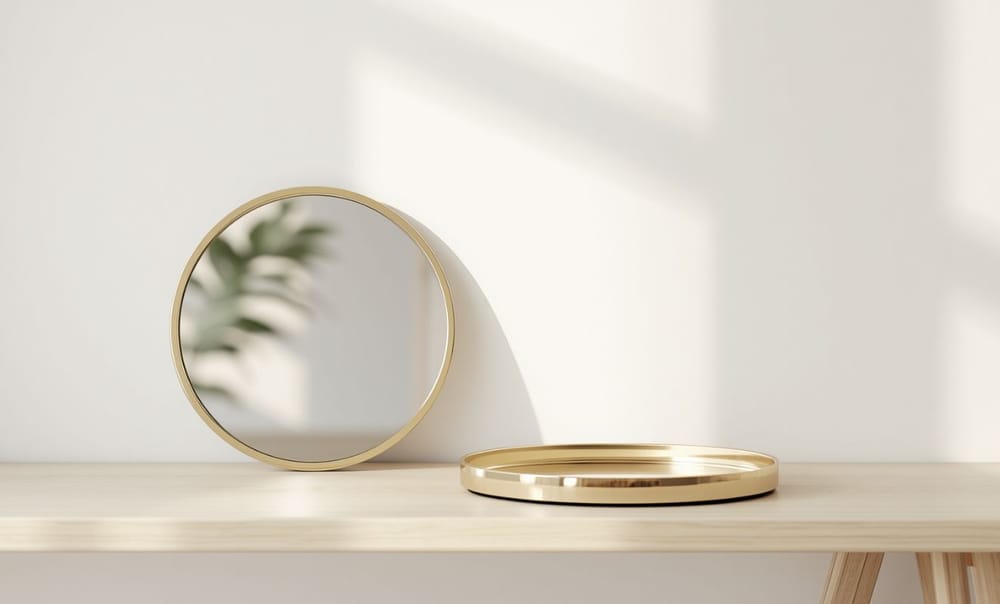
Reflection stands for insight and expanded awareness. When light bounces across a surface, it visually multiplies the space and invites the mind to see the room from more than one angle. That matters because so many creative breakthroughs come from looking at a problem differently.
Suitable reflective items for this sector include decorative mirrors, polished metallic trays, glass artwork and reflective sculptures. As light moves through the day, they create a subtle, shifting quality that naturally holds attention and sparks curiosity.
Use them thoughtfully, though. Too many reflective surfaces create visual chaos and become a distraction in themselves. A few well-placed pieces will make the space feel bright and alive without turning it into a hall of mirrors.
This one is my favourite. An idea catalyst table is a small surface in the creativity sector holding objects chosen specifically to spark imagination and curiosity.
You might include a sketchbook or notebook for jotting ideas, an unusual object picked up on a trip, a book about creativity or innovation, or an interesting sculpture that makes you ask questions. The collection should be small and personal, not a display of everything you own.
The purpose is to create a visual trigger. When your mind keeps encountering things connected with imagination and exploration, it becomes more receptive to new ideas. Many artists and inventors do this by instinct, surrounding themselves with things that keep them curious. A catalyst table lets you do it on purpose, and over time it reinforces the belief that your home supports creative exploration.
If you share your home with children, invite them to add something to the table now and then, a drawing, a shell, an odd stone. It turns the catalyst table into a small family tradition, and it ties in neatly with this sector's link to the little ones in your life.
Creativity thrives where energy is active and dynamic. Stagnant spaces tend to produce stagnant thinking. That is why traditional practice sometimes adds a little gentle motion to the creativity sector, which keeps Chi moving and the environment engaging.
Examples include kinetic sculptures, small rotating decorative pieces, hanging mobiles and softly moving art. They create subtle movement that catches the eye and wakes up attention.
The human brain is naturally sensitive to motion. When your eye registers it, alertness and curiosity follow, which helps prevent the dullness that settles into still, lifeless rooms. Keep the movement gentle. A slowly turning mobile is inspiring, but anything noisy or dramatic quickly becomes a distraction.
Colour shapes the feel of any space, and this sector is no exception. Since it belongs to Metal, the most supportive palette is made of clear, bright and refined tones: white, silver, metallic grey and soft neutrals. These visually say openness and precision, and they make a room feel clean and mentally refreshing.
To add a touch of curiosity and optimism, bring in small accents of pale blue, light yellow or gentle green. Use them in moderation, as a seasoning rather than the main dish. The aim is a balance between mental clarity and creative stimulation.
Get this right, and the sector feels bright, inviting and intellectually energising. Over time, that supports a mind that is open to new ideas, experiments and innovation.

If one of these six tools made you want to walk over and clear a corner right now, you are already thinking like a Feng Shui practitioner.
What you just learned is one piece of a larger system. Every sector of your home connects to the others, and the results come when you understand how they work together and what to do in each one.
That is the idea behind the Inner and Outer Feng Shui program I built together with Master Dom, a renowned Feng Shui Master from Singapore known for helping ordinary people attract luck and turn situations around. Outer Feng Shui aligns your home's energy using the same ancient principles Chinese emperors used for over 5,000 years. Inner Feng Shui clears emotional blockages, rewires negative self-talk and raises your internal frequency, so you can actually harvest the ideas and opportunities your space helps you find.
Starting is free. Click the button, create your free Skool account, and you can begin watching right away. A selection of lessons across both Inner and Outer Feng Shui is already unlocked for you, with no payment and no card required.
The creativity sector belongs to Metal, and it rewards clarity, refinement and room to breathe. Precision metal, white space, reflection, an idea catalyst table, gentle movement and a bright, clean palette are six practical ways to wake it up.
You do not need all six. Pick the one that excites you most, try it this week, and pay attention to how it feels when you sit down to think. Creativity does not appear out of nowhere. Sometimes it just needs a better room to walk into.
Our Inner & Outer Feng Shui System™
Get FREE immediate access to the Inner & Outer Feng Shui System. Selected lessons unlocked daily — map your home’s 9 life sectors, activate your main door, and harness your inner chi. Simply create your Skool account and start immediately.
Free · Immediate access
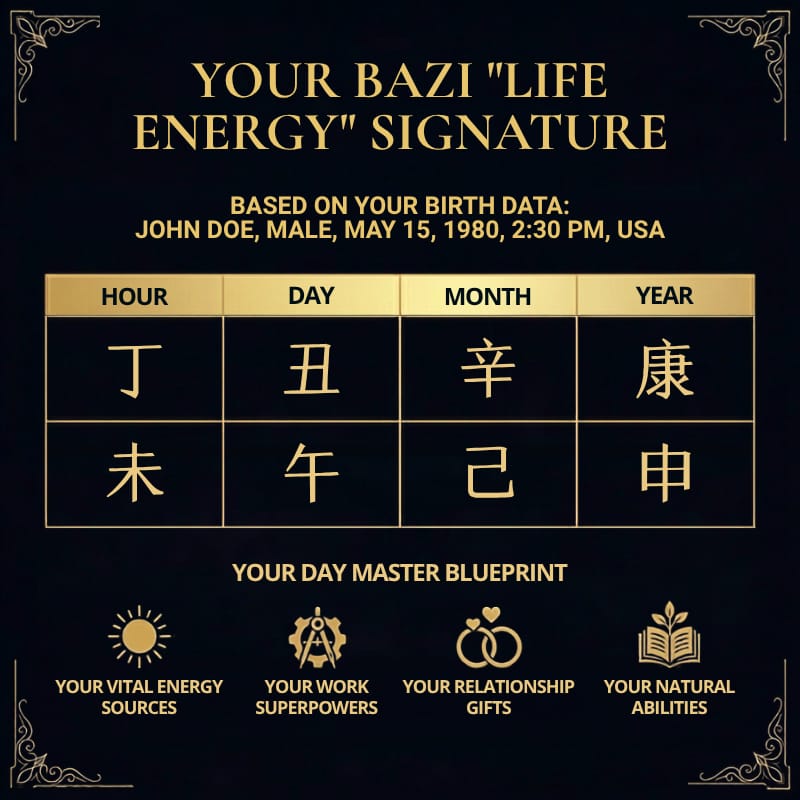
Free BaZi Destiny Life Energy Reading
Discover your Day Master and learn how it is shaping your personality, strengths, and natural luck.
Free · Instant delivery
Follow Us On Our Socials
We Post Daily Content On Internal & External Feng Shui, Spirituality, Manifestation and More!



Privacy Policy | Terms & Conditions
Copyright © 2026 Chi Manifestation. All Rights Reserved.
Your luck is waiting to be aligned
Get a free Day Master BaZi reading, or unlock free access to the Inner & Outer Feng Shui system — no card required, start immediately.
Get Free Resources