
The Quiet Ways the Centre of Your Home Is Draining You
Monday, October 05, 2026
In the last post we covered the power tools for the health sector: an anchoring stone, open circulation, living texture, calibrated light, fresh air, and a weekly reset. If you are new to the series, the health sector sits at the exact centre of your home, the Tai Chi point that Feng Shui compares to the human heart, quietly deciding how much energy reaches everywhere else.
This post covers the other half. The six ordinary, easy to miss conditions that quietly work against that same centre, and undo a lot of the good the power tools are meant to create.
None of these are dramatic. Nobody deliberately sabotages the middle of their own home. They happen slowly, through ordinary living, which is exactly why they are worth naming outright.
The health sector is unusually sensitive to imbalance, more so than most other sectors on the Bagua Map, because it sits at the pivot point the rest of the home depends on. Just as the spine supports the entire body, the centre of the home supports the distribution of Chi to every surrounding sector.
Weaken it, and the disruption rarely stays contained. It spreads outward, showing up as recurring fatigue, trouble sticking to routines, mental exhaustion, a general sense that the house lacks vitality. Many homeowners assume health challenges come only from personal habits, sleep, diet, stress at work. Feng Shui takes the view that the environment itself can support or drain that same energy.
Almost nobody sets out to create these conditions. They build up through ordinary living, the box that never got unpacked, the beam nobody thought twice about, the television left running through the afternoon. None of the six below require major renovation to fix, and every one of them is worth a look this week.
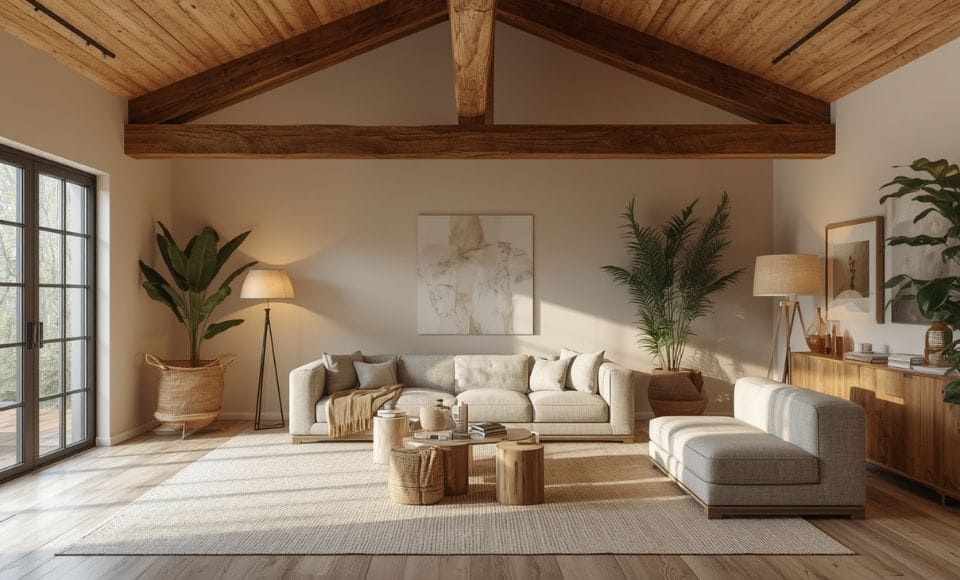
Downward pressure directly above or within the centre of the home creates what Feng Shui calls compressive energy. A large overhead beam crossing the middle of a room, a heavy light fixture hanging low over the centre, a structural column dominating the space, all of these produce a subtle sense of oppression that most people feel without being able to name it.
Even when occupants do not consciously register the beam or the column, the body can still respond to the spatial tension it creates. Over time this compressive quality can contribute to fatigue or mental strain that seems to come from nowhere in particular.
Where the structure itself cannot be removed, soften its visual weight instead. Balanced lighting, natural materials, or a decorative element that draws the eye away from the heaviness above can go a long way toward lifting the feeling of pressure. The goal is an open, unobstructed feeling, not a construction project.
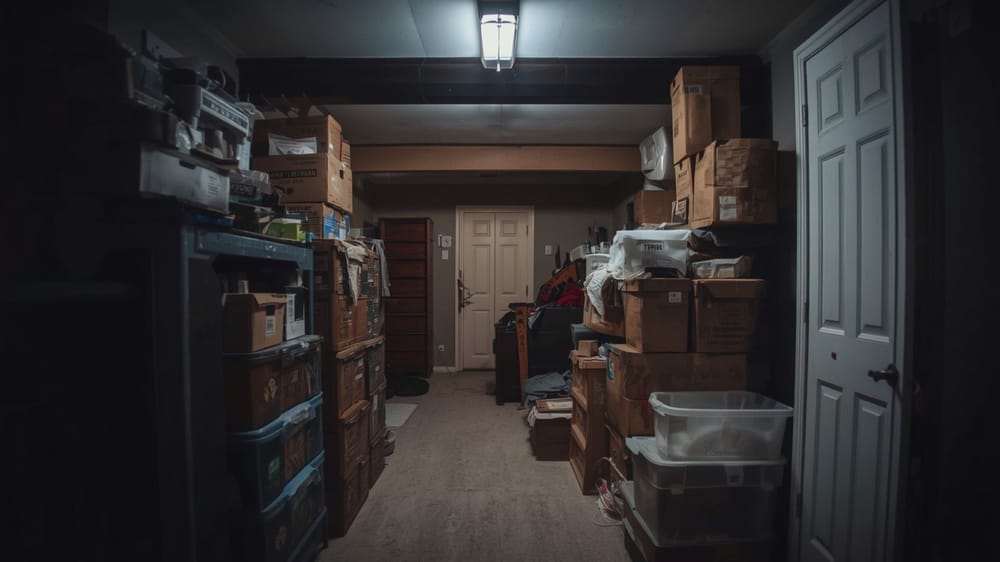
This is the single most common issue, and it was exactly what was happening in last week's example. Storage cabinets, stacked boxes and unused furniture drift toward the middle of a floor plan more often than anyone intends, usually because it is the most convenient flat surface in the house.
The problem is that the centre is meant to function as a breathing point, the spot energy passes through on its way to every other sector. Clutter it, and the whole home can start to feel congested rather than just that one room. Over time this often shows up as reduced motivation, mental fog, or a lack of clarity that people struggle to trace to any single cause.
Homeowners who clear this space report the house feeling lighter almost immediately, often within days. The centre should remain visually open and free from unnecessary accumulation, which usually means finding the boxes a home somewhere else in the house rather than simply moving them to another corner of the same room.
Fire energy belongs in the fame and reputation sector, where intensity and visibility are the point. In the centre of the home, where stability is what is needed, too much fire creates agitation instead. Dominant red colour schemes, harsh overhead lighting, a fireplace positioned centrally, or a cluster of heat generating electronics can all tip this sector out of balance.
When fire energy dominates the health sector, the environment can feel restless rather than grounding, and occupants may find themselves more easily stressed, impatient, or mentally overstimulated without an obvious external cause.
The fix is not to remove fire altogether, just to keep it from dominating. The health sector responds far better to Earth supportive tones and materials, terracotta, sand, warm neutral colours, than to anything that runs hot.
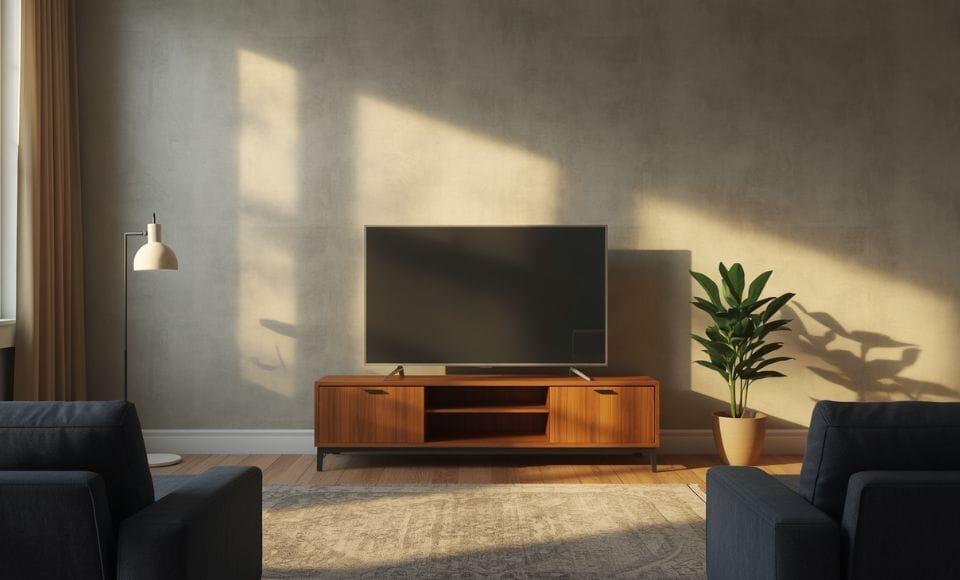
Sound is one of the most overlooked parts of Feng Shui, and the health sector is particularly sensitive to it. A television running constantly, a loud appliance positioned near the centre, or a phone that never stops chiming keeps the nervous system in a low simmer of stress, even when nobody consciously notices the noise anymore.
A healthy home needs moments of genuine quiet. Silence, or something close to it, gives the nervous system room to reset. Reducing unnecessary noise near the centre of the home, muting notifications, switching the television off between programmes rather than leaving it running as background, does more for the household's sense of calm than most people expect.
Stagnant air produces stagnant Chi, and modern homes sealed tightly for energy efficiency often trade fresh air for a lower heating bill without realising the cost. Rooms that feel stuffy or humid, windows that stay shut for weeks, a general staleness in the air, all of these are signs worth paying attention to.
In Feng Shui terms, air movement represents the circulation of Chi throughout the home, so a house that cannot breathe struggles to circulate energy properly no matter what else is arranged correctly.
The remedy is simple even when the cause creeps up slowly. Open windows regularly where the weather allows, let air move between rooms, and do not let convenience become an excuse for a home that never breathes.
This is the most subtle of the six, and the one people are most likely to dismiss. Spaces hold onto the emotional tone of what has repeatedly happened in them. A centre of the home that is frequently the site of arguments or tension can retain that atmosphere long after the specific situation has passed, and environmental psychology backs up the idea that people associate feelings with the places they happened.
While this idea can sound abstract, it plays out in ordinary ways. A room where a difficult conversation keeps happening can start to feel tense even on an ordinary Tuesday when nothing is actually wrong.
If the middle of your home has carried more than its share of stress lately, a deliberate reset helps: clean it properly, rearrange a few objects, bring in something calming. The goal is not to pretend nothing happened, just to give the space a chance to hold something different going forward.

Every one of these six conditions is fixable in an afternoon, and most of them in far less time than that.
Clearing them is Outer Feng Shui working exactly as it should, restoring the centre of your home so it can do its job of distributing energy evenly again. But a genuinely calm house still cannot undo what a person carries into it.
That is the second half of the Inner and Outer Feng Shui program I built together with Master Dom, a renowned Feng Shui master from Singapore known for helping ordinary people attract luck and turn difficult situations around. Outer Feng Shui aligns the home using principles Chinese emperors relied on for more than five thousand years. Inner Feng Shui clears emotional blockages and rewires the self-talk that keeps stress circulating long after the room itself has calmed down.
Starting is free. Click the button, create your free Skool account, and you can begin watching right away. A selection of lessons across both Inner and Outer Feng Shui is already unlocked for you, with no payment and no card required.
The health sector is sensitive precisely because it sits at the pivot point the rest of the home depends on. Small disruptions there rarely stay small.
Watch for heavy structure pressing on the centre, storage creeping into it, too much fire energy, noise that never lets up, air that never moves, and emotional residue nobody has addressed.
None of these require renovation. Most take an afternoon, and some take considerably less. Clear them, and the centre of your home can finally do the job it is meant to do.
Our Inner & Outer Feng Shui System™
Get FREE immediate access to the Inner & Outer Feng Shui System. Selected lessons unlocked daily — map your home’s 9 life sectors, activate your main door, and harness your inner chi. Simply create your Skool account and start immediately.
Free · Immediate access
Free BaZi Destiny Life Energy Reading
Discover your Day Master and learn how it is shaping your personality, strengths, and natural luck.
Free · Instant delivery
Follow Us On Our Socials
We Post Daily Content On Internal & External Feng Shui, Spirituality, Manifestation and More!



Privacy Policy | Terms & Conditions
Copyright © 2026 Chi Manifestation. All Rights Reserved.
Your luck is waiting to be aligned
Get a free Day Master BaZi reading, or unlock free access to the Inner & Outer Feng Shui system — no card required, start immediately.
Get Free Resources