
Six Things Quietly Draining Your Knowledge Sector
Monday, October 26, 2026
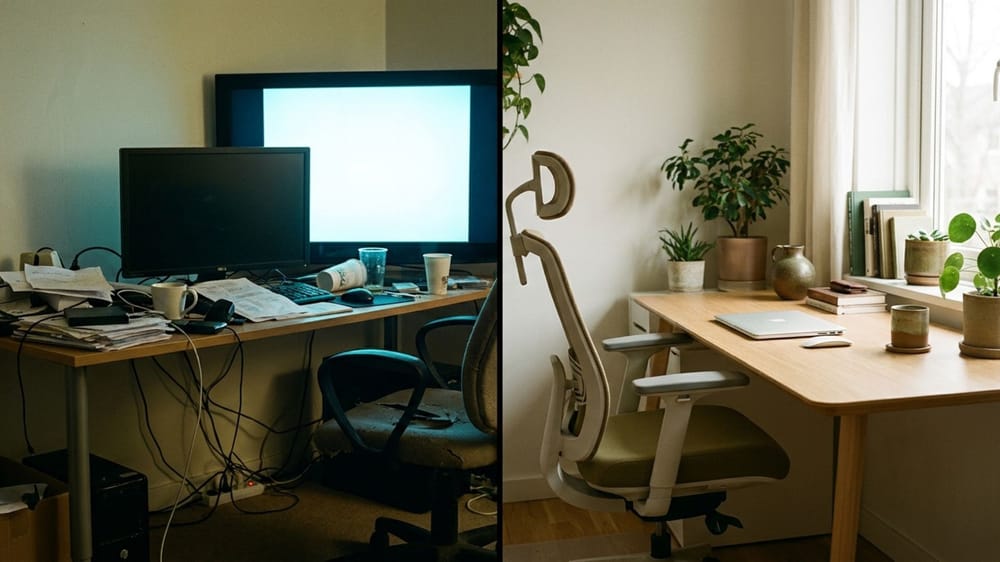
Marcus is retraining as a web developer. He studies from home in the evenings, at a desk he squeezed into the corner of the living room. The television sits just behind his shoulder, his phone buzzes beside the keyboard and a pile of papers has been growing at his elbow since spring.
He sits down with the best intentions. Forty minutes later he has answered three notifications, watched half a programme and read one paragraph. He assumed he simply was not cut out for learning.
In Feng Shui, we would look at the room first. The knowledge sector is one of the most sensitive parts of the home, because learning and reflection need a mind that can stay calm and attentive for a long time. Unlike sectors for career or wealth, which thrive on action, this one wants Chi to move slowly and steadily so the mind can settle into deeper thought.
When the energy there becomes scattered, the mind often mirrors it. You may struggle to concentrate, grow impatient with complex ideas or feel tired when a decision needs care. Over time, the habit of learning weakens, and it is not because you do not care. It is because the space does not support it.
Modern life makes this harder than it used to be. Televisions run in the background, phones deliver a steady stream of alerts and entertainment competes for our attention all day. These things bring convenience and enjoyment, so the aim is not to banish them. It is to make sure they do not take over the one corner of the home that is meant for thinking.
The good news is that the fixes are simple and kind. Here are six things to look out for in your knowledge sector, and what to do about each.
Learning asks the brain to hold attention for a long stretch. Every time something interrupts, whether it is a television in the next room, loud music, a chat in the same space or a phone alert, your mind has to restart the process of concentrating. Cognitive scientists call the state we are aiming for deep focus, and constant interruption keeps us out of it.
In Feng Shui terms, noise adds too much Yang energy to a sector that prefers calm and grounded Chi. Yang is active and stimulating, which is wonderful for social or productive areas. In the knowledge sector, it makes the space restless, and a restless space tends to produce a restless mind.
What to do: ideally, place your study area in a peaceful part of the home. Switch the television off at the wall, silence notifications while you work, and agree quiet hours with the people you live with. Even an hour of true quiet can feel like a different room.
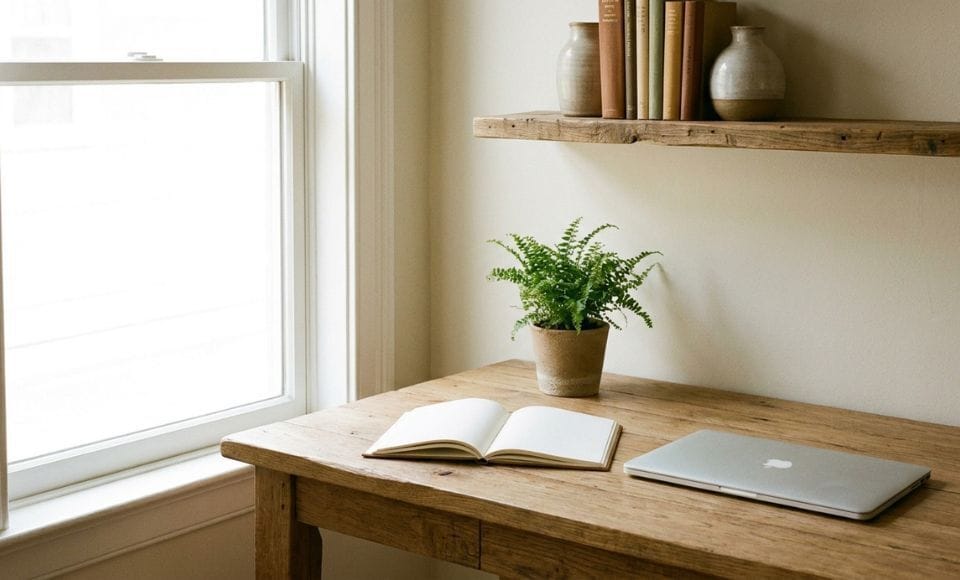
Piles of papers, overflowing bookshelves and surfaces dotted with unrelated ornaments all compete for your attention. Your brain is constantly scanning what it sees, and each extra object asks for a little of your energy to filter out. Psychologists call the result cognitive overload. Instead of thinking about the ideas in your book, your mind is quietly dealing with the room.
Feng Shui agrees, in its own language. Clutter blocks the smooth circulation of Chi, which becomes trapped around heaps of objects and makes the atmosphere feel heavy and draining. The knowledge sector should feel orderly and mentally spacious.
What to do: clear your desk surface down to what you need today. Give books and papers a proper home, and let go of anything you no longer use. Marcus filed his pile in one afternoon and said the desk felt twice as big.
Colour affects mood and thinking more than we realise. The knowledge sector belongs to the Earth element, so it feels best in surroundings that are stable, calm and grounded. Extremely bright neon colours, intense red or electric blue walls and bold geometric patterns that dominate a room can make the space too lively for sustained concentration.
These choices invite quick reactions rather than careful thought. The brain feels alert and energised, but struggles to stay with a complex task. In Feng Shui, bright and aggressive colours carry strong Yang energy, which stirs up activity and emotional excitement.
What to do: you do not have to repaint the whole room. Soften the area with earthy tones such as sand, beige, terracotta or muted yellow, using cushions, a throw, a lampshade or a framed print. Keep the bolder colours for the social corners of your home.
Our behaviour follows environmental cues far more than we like to admit. If your study spot sits right beside entertainment devices, faces the television or keeps learning materials in a cupboard across the house, your brain will quietly choose the easiest option, and the easiest option is rarely a textbook.
From a Feng Shui perspective, a space sends signals about what it is for. If the sector is full of signs of leisure and relaxation, its Chi begins to support rest rather than learning, and you may find yourself reading and reflecting less and less.
What to do: turn your desk away from screens that are not part of your work, or cover them when you study. Keep books, journals and learning resources visible and within reach. When the next step is easy, you are far more likely to take it.
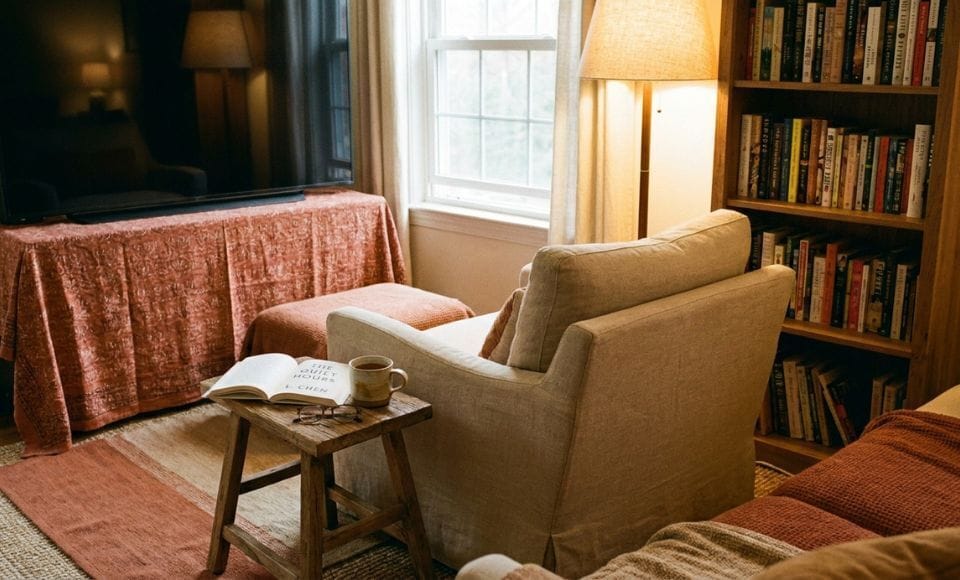
A small ritual helps here too. Before you begin, take a moment to put the phone in another room and straighten your papers. It tells your brain that something different is about to happen, and it makes the first five minutes much easier.
Physical comfort is often overlooked in places meant for the mind. Yet a body that is uncomfortable cannot stay focused for long. A chair without back support, a desk at an awkward height or a seat that pulls you into a strained posture all divide your attention between your work and your discomfort.
That leaves less mental energy for absorbing information, and over time you may start avoiding the study area simply because it is unpleasant to sit there. In Feng Shui, seating represents supportive energy. A stable chair stands for a strong foundation, which is why traditional teaching puts such weight on having a solid backing behind where you sit.
What to do: choose a chair that supports your back and lets your feet rest flat on the floor, and set your desk at a height where your shoulders can relax. If you can, place your seat so that you have a wall or solid furniture behind you. When your body feels held, your mind can stay with ideas for longer.
Finally, look at the light and the space around you. A study corner tucked into a dim nook, a room dominated by heavy furniture that blocks the window, or a narrow layout that feels boxed in can all weaken the knowledge sector. The sector wants calm, but it should never feel oppressive or confined.
When a space feels dark or closed, the mind can pick up the same sense of limitation. Intellectual exploration prefers somewhere open and expansive. Daylight in particular has been linked to better mood, concentration and cognitive performance, and in Feng Shui, light stands for Yang energy that wakes up awareness and alertness.
What to do: move your study spot closer to a window, open the curtains fully and shift bulky furniture away from the light. In the evening, use a warm lamp so the area stays bright enough to stimulate thinking while remaining soft enough for reflection. The aim is balance.

If you recognised your own desk in more than one of these, take heart. Awareness is where every change begins.
What you have just learned is one piece of a larger system. Every sector of your home connects to the others, and results come when you understand how they work together and what to do in each one.
That is the idea behind the Inner and Outer Feng Shui program I built together with Master Dom, a renowned Feng Shui Master from Singapore known for helping ordinary people attract luck and turn situations around. Outer Feng Shui aligns your home's energy using the same ancient principles Chinese emperors used for over 5,000 years. Inner Feng Shui clears emotional blockages, rewires negative self-talk and raises your internal frequency, so that a calmer space can turn into real progress.
You can start learning Feng Shui for free. Click the button, create your free Skool account, and you can begin watching straight away. A selection of lessons across both Inner and Outer Feng Shui is already unlocked for you, with no payment and no card required.
Noise, clutter, loud colours, easy distractions, a poor chair and a dark corner can each take a little focus from your knowledge sector. None of them are permanent. Remove them one at a time, and the sector starts to do what it was always meant to do: help you think clearly, learn steadily and decide wisely.
Marcus started by switching the television off at the wall and clearing his desk. That same week he finished a whole module without checking his phone once. Choose one thing from this list and change it today. Your mind will thank you for the quiet.

Our Inner & Outer Feng Shui System™
Get FREE immediate access to the Inner & Outer Feng Shui System. Selected lessons unlocked daily — map your home’s 9 life sectors, activate your main door, and harness your inner chi. Simply create your Skool account and start immediately.
Free · Immediate access

Free BaZi Destiny Life Energy Reading
Discover your Day Master and learn how it is shaping your personality, strengths, and natural luck.
Free · Instant delivery
Follow Us On Our Socials
We Post Daily Content On Internal & External Feng Shui, Spirituality, Manifestation and More!



Privacy Policy | Terms & Conditions
Copyright © 2026 Chi Manifestation. All Rights Reserved.
Your luck is waiting to be aligned
Get a free Day Master BaZi reading, or unlock free access to the Inner & Outer Feng Shui system — no card required, start immediately.
Get Free Resources