
Room Doesn't Match the Bagua Map? Here's What to Do
Thursday, November 12, 2026
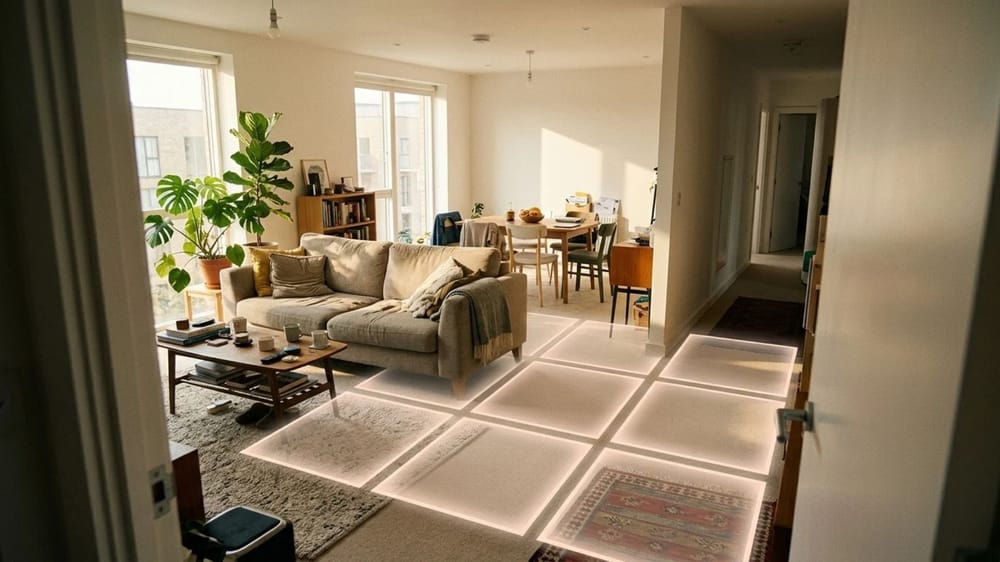
Dana had printed the Bagua map, taped it to her fridge, and spent a whole Saturday afternoon holding a floor plan up to the light. Her flat was not a tidy square. The hallway cut across one corner, the bathroom sat right where the grid said her prosperity area should be, and the open-plan living room seemed to belong to three life areas at once.
By teatime she had decided that Feng Shui was not for homes like hers. If that sounds familiar, I have good news. Dana's flat was perfectly normal. Almost every home is.
In this post we will look at why real homes rarely match the Bagua map, how to think about sectors as zones of energy rather than rigid boxes, and what to do when a sector lands in a bathroom, shares a room with another sector, or falls partly in a hallway. By the end you will have a practical way to work with the home you actually live in.
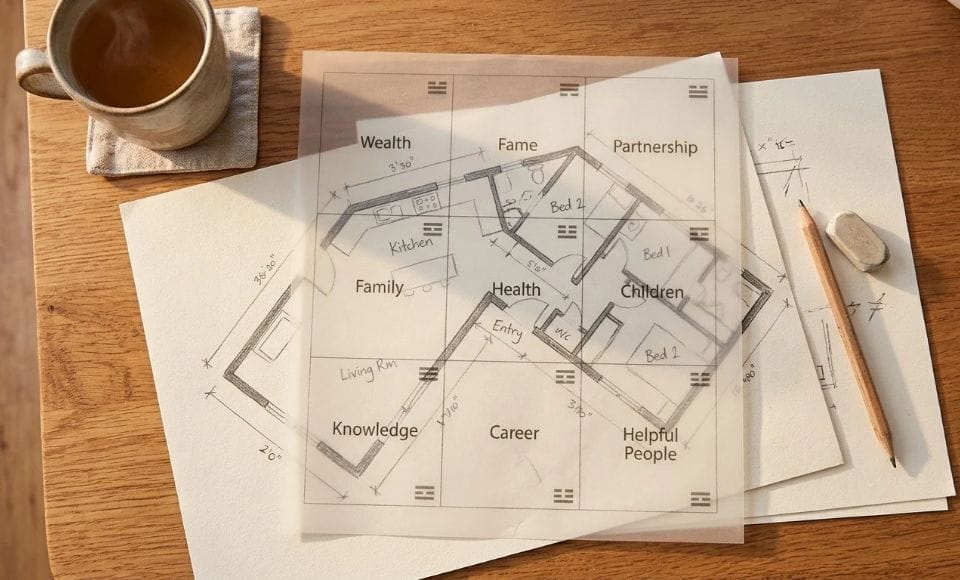
The Bagua map looks wonderfully orderly on paper. Nine squares, each one tied to a life area such as prosperity, love, career or knowledge. It is easy to assume your home should line up with it like a key in a lock.
But think about who designed your home. Architects and developers work around land size, building codes, structural engineering and what will sell. Nobody sat down with a Bagua grid and asked how to make the family sector sit in a perfect square. So you end up with hallways that cut through corners, rooms of all sizes, and layouts that were never planned around energy at all.
Experienced Feng Shui consultants know this well. They rarely walk into a home that matches the diagram. Instead they read the Bagua map flexibly, as a guide to patterns of energy rather than an architectural blueprint. That is the mindset we want to borrow.
The most helpful shift you can make is to stop picturing invisible walls between sectors. Energy does not stop at a line on a diagram. It moves through open spaces, doorways and corridors, and it flows continuously from one area into the next. For that reason the influence of a sector often reaches a little beyond the exact edges of the grid.
Imagine your Prosperity sector sits partly in the living room and partly in the dining area. You do not need to treat them as two competing spaces. Together they contribute to the energy of prosperity in your home. If a sector overlaps a hallway and a nearby room, the activity and atmosphere of both areas can shape it.
So rather than measuring with a ruler, watch how energy actually behaves in your home. Notice where people spend the most time, which way they move through the space, how daylight enters, and which areas feel open or closed in. That living picture is far more useful than a perfect square.
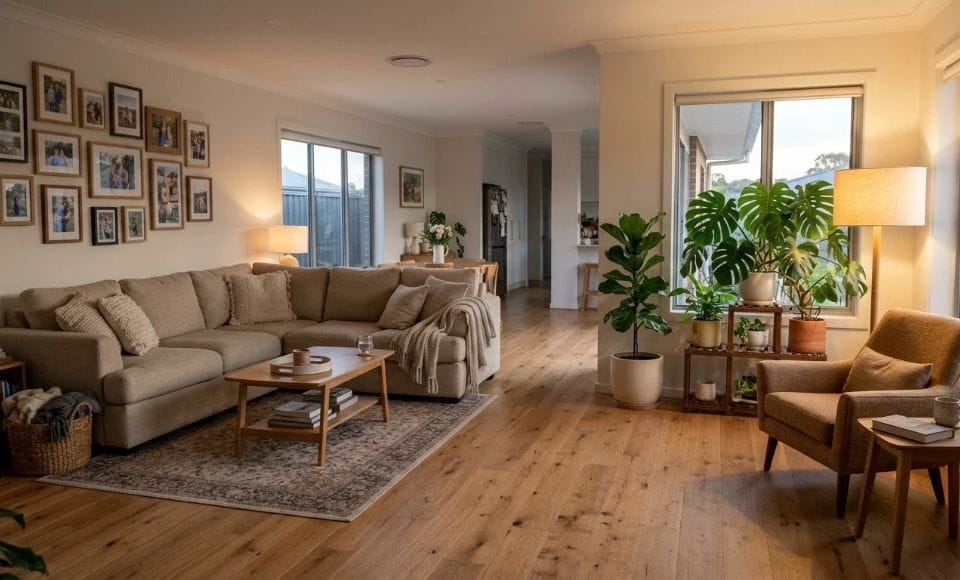
Open-plan homes make this extremely common. A large living room might hold both the Family sector and the Prosperity sector. A home office might sit across both Knowledge and Career. At first glance that looks like a problem, but it is often a gift.
Life areas support each other. Family support often steadies our finances. Learning feeds career success. Creativity strengthens both relationships and professional opportunities. When sectors overlap, those natural partnerships can work in your favour.
Instead of dividing the room rigidly, create gentle sub-zones. One corner can feel like the heart of family life, with the good sofa and a framed photograph. Another corner can carry the symbols of growth and abundance, perhaps a healthy plant and a warm lamp. Small shifts in furniture placement, lighting and decoration are enough to give each part its own character while the room stays whole and harmonious.

If you have ever wondered how to apply all of this to a home that is not textbook perfect, you are exactly the person this next part is for.
What you have just read is one piece of a much larger system. The Bagua map, the five elements and the energy of each sector all work together, and the real results come when you see how they fit.
That is why I built the Inner & Outer Feng Shui program together with Master Dom, a second-generation Feng Shui master in Singapore, known for helping ordinary people attract luck and turn situations around. Outer Feng Shui shows you how to align your home's energy using the same ancient principles used by Chinese emperors for over 5,000 years. Inner Feng Shui helps you clear emotional blockages and rewire negative self-talk, so you are ready to harvest the opportunities your home creates.
You can start learning Feng Shui for free. All you have to do is click the button, create your free Skool account, and start watching. A selection of lessons across both Inner and Outer Feng Shui is already unlocked for you, with no payment and no card required.
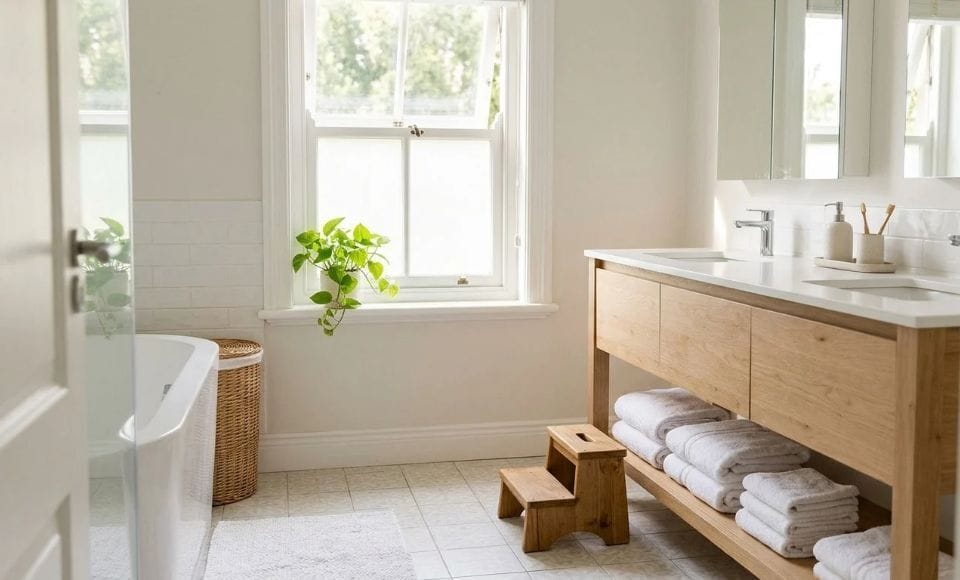
This is the one that worries people most. Bathrooms carry strong water and drainage energy, so it is natural to wonder whether a bathroom sitting in your Prosperity or Love corner is quietly draining it away.
Try not to over-interpret it. A bathroom inside a sector does not destroy that sector. What matters is the condition of the space. A bathroom that is clean, well lit and properly ventilated supports healthier energy than one that is neglected or cluttered. Keep surfaces clear, replace dim bulbs, open a window when you can, and keep the door closed when it is not in use.
The same goes for laundry rooms, storage areas and closets. Tidy them, light them well, and let them be cared for rather than forgotten. A well-kept utility space is a quiet ally. A pile of neglected clutter is a source of stagnant Sha Chi.
There is one more helpful tool here. Activating the opposite sector can restore balance when a sector sits in a challenging place. Sectors across the centre of the home influence each other, so giving extra attention to the opposite corner can compensate for what the awkward room cannot offer.
Because energy travels through the whole home, the areas around a sector help shape it. If your Prosperity sector overlaps a hallway, the nearby living room or dining area still influences the prosperity energy of the home.
So strengthen those neighbours. Keep them well lit, uncluttered and frequently used. Welcoming, active spaces support stronger energy flow. Dark, neglected spaces create stagnation that can weaken the sectors beside them.
Think of your home as one continuous system. When one part becomes healthier and more balanced, the benefits spread outwards to the areas around it. That is why you can work effectively even when your sector boundaries are untidy.
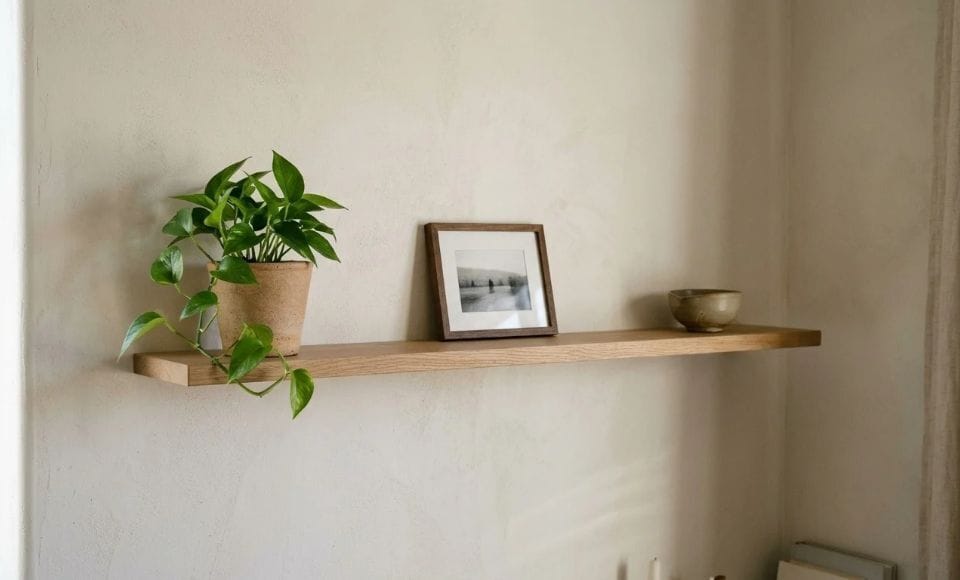
When people first learn about Feng Shui, many feel they must fix everything at once. They fill a small sector with symbolic objects, hoping to boost it. The result is often the opposite of what they wanted: visual clutter that overwhelms the space.
A room full of objects creates mental noise. Your brain keeps processing all that extra information, and calm and clarity slip away. In Feng Shui, balance matters more than intensity. A few thoughtful adjustments will do more for you than a dozen ornaments. Aim for a space that feels comfortable, harmonious and easy to live in, and let the energy follow.
If you would like a practical routine, try this. Stand at your front door and sketch the overall outline of your home on a sheet of paper. Lay the Bagua grid over it, then walk through each sector with a notebook. For every one, write down three things: which rooms it touches, how often you actually use that space, and how it feels when you stand there.
You will quickly see a pattern. Some sectors fall in busy, bright areas and are already doing well. Others sit in rarely used corners that feel flat or heavy. Those are the places where a little attention goes a long way. Open a curtain, move a cluttered chair, add a lamp, or simply start using the space more often. Energy responds to presence and care, and it rarely asks for anything dramatic.
Most importantly, do this with curiosity rather than judgement. You are not grading your home. You are getting to know it, the way you would get to know a new friend.
It can help to keep a short list of questions in mind as you walk around. Is this space clean and well lit? Do I enjoy being here? Does the energy move through it, or does it get stuck behind furniture and boxes? Is there one small thing I could change today? Questions like these keep you grounded in what your home is really like, which is always more useful than what a diagram says it should be.
Dana eventually put the floor plan away and did something simpler. She cleaned and brightened the bathroom, moved a lamp into the shadowy end of the hallway, and gave her living room two small zones. Within a few weeks the whole flat felt lighter, and she no longer felt that her home was getting it wrong.
That is the heart of it. Feng Shui is not a rigid formula and your home does not have to pass an exam. The Bagua map is a tool for noticing patterns and deciding where a little attention would help. When your home feels clean, organised, well lit and comfortable, energy tends to improve all by itself.
Here is your simple next step. Pick one sector that does not match the map in your home. Ask whether it overlaps a hallway, shares a room or falls in a utility space. Then make one small change: a brighter bulb, a cleared surface, a corner with a clear purpose. Start there, and let the rest follow.
Our Inner & Outer Feng Shui System™
Get FREE immediate access to the Inner & Outer Feng Shui System. Selected lessons unlocked daily — map your home’s 9 life sectors, activate your main door, and harness your inner chi. Simply create your Skool account and start immediately.
Free · Immediate access
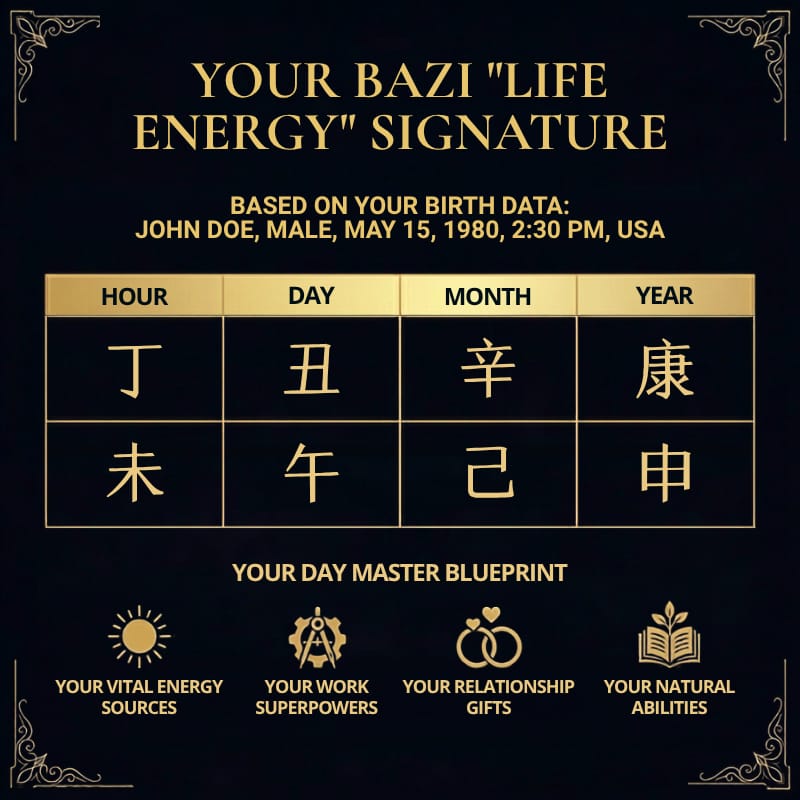
Free BaZi Destiny Life Energy Reading
Discover your Day Master and learn how it is shaping your personality, strengths, and natural luck.
Free · Instant delivery
Follow Us On Our Socials
We Post Daily Content On Internal & External Feng Shui, Spirituality, Manifestation and More!



Privacy Policy | Terms & Conditions
Copyright © 2026 Chi Manifestation. All Rights Reserved.
Your luck is waiting to be aligned
Get a free Day Master BaZi reading, or unlock free access to the Inner & Outer Feng Shui system — no card required, start immediately.
Get Free Resources